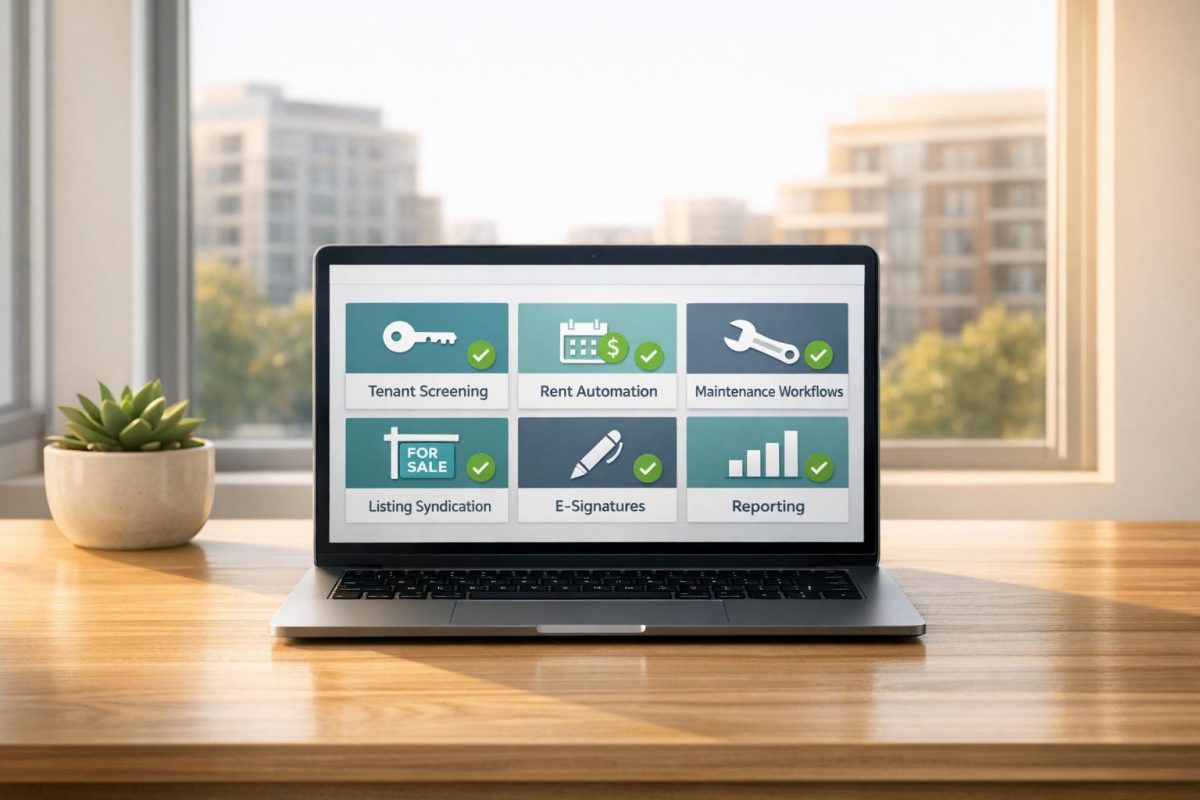
Cloud property management software simplifies tasks like tenant communication, financial tracking, and maintenance management, all accessible from any device with an internet connection. By streamlining operations, these platforms save time, reduce errors, and support portfolio growth. Here’s what you should look for:
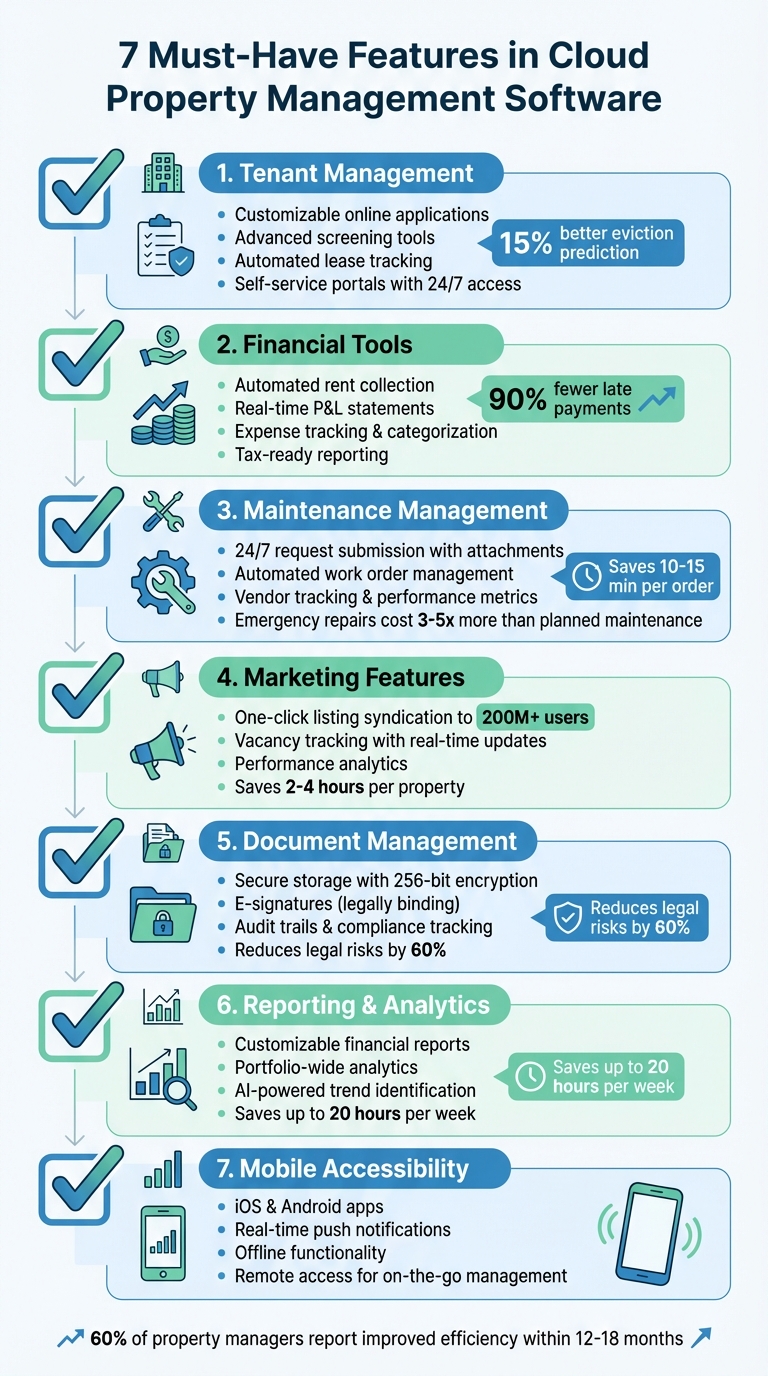
- Tenant Management: Customizable online applications, advanced screening tools, automated lease tracking, and self-service portals for tenants.
- Financial Tools: Automated rent collection, real-time profit and loss statements, expense tracking, and tax-ready reporting.
- Maintenance Management: 24/7 request submission with attachments, automated work order management, and vendor tracking.
- Marketing Features: Listing syndication, vacancy tracking, and performance analytics for filling units faster.
- Document Management: Secure storage, e-signatures, and audit trails for easy access and compliance.
- Reporting and Analytics: Customizable reports and portfolio-wide analytics to monitor performance.
- Mobile Accessibility: Dedicated apps with real-time notifications, offline functionality, and remote access for on-the-go management.
These features not only simplify property management but also improve efficiency and tenant satisfaction. Whether you’re managing a few units or a large portfolio, the right software can make all the difference.
7 Must-Have Features in Cloud Property Management Software
Tenant Management Features
Managing tenants effectively starts with selecting the right individuals for your properties. A good cloud-based system should offer customizable online applications that gather essential details like Social Security numbers, employment history, and previous addresses, while also including a signed release of information. By digitizing this process, you eliminate the hassle of paper forms and ensure consistent data collection. From there, it’s all about thorough screening to maintain tenant quality.
Screening tools are a must-have. Look for platforms that provide key insights such as credit scores, payment history, debt-to-income ratios, and criminal background checks across various databases. Advanced tools can also search eviction records and verify identities to spot fraudulent income documents. For example, tools like ResidentScore are 15% better at predicting eviction risks compared to traditional credit scores. Additionally, modern income verification systems can confirm employment and income with an impressive 99.8% accuracy. Considering that tenant turnover costs average $3,872 per unit and eviction proceedings can surpass $5,000, the value of investing in robust screening tools becomes clear.
Tenant Screening
Built-in screening features should go beyond standard credit checks. A reliable system will pull data from specialized sources to verify Social Security numbers, check for financial risks like bankruptcies, and review eviction histories. Compliance matters too – choose software that includes Fair Credit Reporting Act (FCRA)-compliant forms and can generate automated "Adverse Action" notices for applicants who are denied.
A real-time dashboard is another essential feature, allowing you to track application statuses, screening progress, and approval decisions in one place. Some platforms even let you pass screening costs directly to applicants. Typically, this costs $17-$20 per report if you cover it or about $35 under applicant-pay models. It’s also wise to verify references from previous landlords rather than relying on current ones, as current landlords may give overly positive feedback to encourage a problematic tenant to move out.
Lease Tracking
Once tenants are screened, automated lease tracking can help you stay on top of lease terms. This feature ensures you never miss a renewal deadline by sending timely reminders to both you and your tenants. With only 63.8% of renters renewing their leases nationwide, proactive outreach can make a big difference in maintaining occupancy rates.
Automated lease templates that update with local and state law changes reduce legal risks. For instance, Connecticut limits security deposits to two months’ rent, while Georgia has no such limit. A robust tracking system should also integrate with your accounting tools, monitoring security deposits, pet deposits, and first/last month’s rent seamlessly. Real-time dashboards provide a clear view of lease statuses, balances owed, and upcoming vacancies across your portfolio.
Tenant Portals
Self-service portals simplify tenant interactions by offering 24/7 access to account details, lease documents, and maintenance requests. Tenants can submit maintenance requests with photos, make online payments, set up recurring rent payments, and upload important documents like insurance certificates.
These portals act as a communication hub, keeping all tenant interactions in one organized place. Push notifications can alert tenants about inspections, rent due dates, or maintenance updates. Mobile apps further enhance convenience, allowing tenants to manage everything from their phones. Property teams often save 60-80% of their time on compliance tasks with these integrated systems, and most platforms pay for themselves within 12-18 months through improved efficiency and reduced legal costs.
sbb-itb-9e51f47
Financial Tracking and Accounting
Effective financial tools can make property management much simpler. A good system should cover everything from automated rent collection to tax-ready reporting, giving you an up-to-date view of your portfolio’s financial health at any time.
Online Rent Collection
Automating rent collection eliminates the hassle of chasing payments and depositing checks. The best software sends automatic reminders before rent is due and notifies you of overdue payments. In fact, property managers report 90% fewer late payments when using features like automated reminders, late fees, and auto-pay options. The top platforms support various payment methods, including ACH bank transfers, credit cards, and debit cards. ACH transfers are often preferred because they have lower processing fees and settle within 1-2 business days.
Security is another key factor. Online platforms use data encryption and Two-Factor Authentication (2FA) to safeguard sensitive financial information, making them far more secure than paper checks, which display account numbers and signatures.
Once secure, automated rent collection is in place, tracking income becomes much easier. These systems also enable real-time financial reporting, keeping you informed at all times.
Profit and Loss Statements
Cloud-based software simplifies financial reporting by generating detailed income statements and rent rolls that break down revenue and expenses by property and unit. Real-time dashboards provide an instant overview of rent collected, outstanding balances, and the overall performance of your portfolio. With every transaction recorded at the unit level, payment statements and financial reports remain accurate and reliable. Additionally, locking financial records after filing ensures data integrity, which is crucial for audits.
Expense Tracking
Using spreadsheets for expense tracking can quickly become overwhelming as your portfolio grows. Automated tools solve this problem by categorizing and logging expenses – like maintenance costs and vendor invoices – without manual effort. Many systems integrate with a Chart of Accounts, streamlining tax preparation.
Automated bank reconciliation matches transactions with bank statements in real time, flagging discrepancies and reducing errors. The best platforms even convert maintenance work orders into bills and allow online vendor payments, ensuring all expenses are accurately recorded. Fixed costs, such as mortgages, insurance, and taxes, are also logged automatically, keeping financial records up-to-date.
Connecting your business bank accounts to the software creates a centralized view of all transactions, enabling you to identify trends and anomalies quickly. This integration also simplifies tax season by automatically preparing data for Schedule E tax forms and 1099s.
These financial tools work seamlessly with tenant and maintenance management features, offering a unified approach to property oversight.
Maintenance Management Features
Efficiently managing maintenance requests is critical for keeping tenants satisfied and maintaining property value. In fact, nearly 47% of renters consider maintenance the most important part of their living experience. The right tools can transform repair coordination into a smooth, trackable process, saving time and preventing costly emergencies. Here’s how key features in maintenance management software can make this happen.
Request Submission with Attachments
Tenant portals allow renters to submit maintenance requests 24/7, complete with photo or video attachments. These visuals help technicians diagnose issues faster and more accurately. Real-time updates – sent via email, push notifications, or SMS – keep tenants informed as their request moves through stages like "assigned", "in progress", and "completed." By automating maintenance tracking, property managers can save up to 20 hours a week compared to manually handling calls and spreadsheets. Once submitted, requests are seamlessly converted into actionable work orders, ensuring no task is overlooked.
Work Order Management
Good software automatically generates work orders and assigns them to the right technicians based on their skills, availability, and proximity. Centralized dashboards provide live updates on every open ticket, making it easy to track progress and avoid delays. Technicians can access unit histories and complete work orders directly from their smartphones, cutting 10 to 15 minutes per work order by eliminating paperwork. Automated reminders for overdue tasks or recurring maintenance – like HVAC filter changes – are essential, as emergency repairs can cost 3 to 5 times more than routine, planned maintenance.
Vendor Tracking
Keeping vendor details organized ensures reliable service and protects your business. Maintenance software should store vendor contacts, track insurance and licenses, and link invoices to accounting systems for an easy-to-follow audit trail. Performance tracking features let you evaluate metrics like completion times, response rates, and work quality. This data is invaluable for renegotiating contracts and deciding which vendors to keep. Real estate writer Tara Mastroeni highlights the importance of a strong vendor network:
A strong vendor network lets you handle maintenance requests faster and more affordably than scrambling for contractors each time.
Regularly auditing vendor performance can reduce overspending by 15%. This structured approach to managing maintenance ties seamlessly into other property management functions, creating a workflow that boosts efficiency across your portfolio.
Rental Listings and Marketing
If you’re looking to fill vacancies quickly, the internet is your best friend – 72% of renters start their search online. Cloud property software simplifies this process with tools like automated syndication and smart vacancy tracking.
Listing Syndication
Creating and managing rental listings manually can be a time sink. Instead, one-click syndication lets you distribute a master listing to major platforms like Zillow, Apartments.com, Realtor.com, and Zumper. For context, Zillow attracts over 200 million users, while Apartments.com sees more than 30 million monthly visitors each month. Jeremy Sine from CoSine Real Estate highlights the convenience:
"Buildium does a great job with vacancy listings. One click and it gets syndicated to dozens of different websites."
This automation can save you 2 to 4 hours per property. Plus, updates – whether it’s new photos, rent changes, or unit availability – sync across all platforms automatically. This ensures you avoid wasting time on inquiries about units that are no longer available. Some platforms even offer AI tools to generate polished property descriptions from your data.
Choosing the right platforms for your property type is key. Zillow tends to work best for single-family homes and condos, while Apartments.com is a better fit for larger multifamily buildings. Syndication expands your reach, but pairing it with vacancy tracking ensures you stay ahead of the game.
Vacancy Tracking
Vacancy tracking tools help you keep an eye on unit availability in real-time, so you can act before a unit sits empty. Visual timelines give you a clear view of current and upcoming occupancy, making it easier to spot gaps and launch automated marketing workflows.
Metrics like Time-to-Lease – the time it takes from listing a unit to signing a lease – can reveal whether your pricing, listing quality, or marketing channels need improvement. If this number exceeds your local market average, it might be time to tweak your approach. Another useful metric is the show-to-application rate, which can indicate if your listings align with renters’ expectations.
When a unit is marked as "occupied", most syndication tools automatically remove the listing from partner sites within 24 hours, eliminating dead leads. This seamless integration between vacancy tracking and listing management ensures your marketing stays focused on available units. Plus, performance reports analyze unit downtime and help identify which campaigns bring in the best leads.
Platforms like Renting Well combine these features, offering property managers an efficient way to syndicate listings and monitor vacancies in real time. This proactive approach not only streamlines your marketing efforts but also enhances overall property management.
Document Management and E-Signatures
Managing a property portfolio often comes with an overwhelming amount of paperwork. This is where centralized, cloud-based document storage steps in to simplify the process. By consolidating critical documents – like leases, applications, maintenance records, and tax files – into one secure location, property managers can save time and reduce inefficiencies. Without centralization, retrieving documents can turn into a time-consuming hassle. Cloud-based solutions solve this by making all files accessible from anywhere. In fact, in 2022, 78% of property managers sought software upgrades to improve document storage and retrieval. Better yet, centralizing data can cut document retrieval times by up to 70%.
Secure Document Storage
When handling sensitive information such as social security numbers, bank details, and signed leases, security is non-negotiable. The right software should include 256-bit encryption for both stored and transmitted data. Features like multi-factor authentication and role-based access controls ensure that users only access information relevant to their roles.
To avoid data loss, automatic backups across multiple locations are essential. Additionally, audit trails provide a detailed log of every action taken on a document, including who accessed it, when, and from which IP address. As Renting Well highlights:
All personal data in the application is encrypted and backed up regularly to ensure the absolute integrity of your property portfolio.
These tools not only enhance document control but also help property managers reduce legal risks by up to 60%.
Digital Lease Signing
Secure storage is just one part of the equation – digital signing takes document management to the next level by speeding up lease finalization. E-signatures eliminate the need for printing, scanning, mailing, or in-person meetings. Tenants can sign leases directly from their mobile devices, streamlining the process. Rental expert Brentnie Daggett from Rentec Direct points out:
Moving quickly through a lease signing process means a shorter vacancy timeframe and increased revenue for landlords and property managers.
E-signatures are legally binding under the federal ESIGN Act and come with tamper-proof audit trails. Look for software that includes a certificate of completion, detailing who signed, the timestamp, and the IP address. Jake Belding from Buildium explains:
A complete audit trail creates a tamper-proof record showing who signed, when they signed, and from what IP address, giving you a certificate of completion for your records.
The best platforms also include features like document routing and automatic reminders for pending signatures. Once the process is complete, signed documents are automatically saved in the tenant’s file library, ensuring everything stays organized and nothing gets misplaced.
Reporting and Analytics
Effective reporting and analytics transform raw data into actionable insights, enabling property managers to make informed decisions. Without the right tools, data can feel overwhelming and unhelpful. But with automated reporting, you can streamline monitoring and focus on the metrics that truly impact performance.
Customizable Reports
Financial reports should provide a clear, real-time snapshot of your portfolio. Tools like income statements and rent rolls show where you stand at any given moment, while detailed breakdowns allow you to filter revenue and expenses by property or unit. This level of specificity makes it easier to pinpoint which properties are thriving and which may need attention. As Renting Well explains:
Understanding your numbers gives you the knowledge and power to make important decisions.
In addition to standard financials, look for software that tracks investment metrics such as net income rate, cap rates, and rental yield. Operational reports – covering areas like vacancy rates, maintenance costs, and rent comparisons – help you stay ahead of market trends and plan for future expenses. Many platforms even format these reports to be print-ready, making it simple to share them with accountants or bookkeepers during audits or year-end reviews.
Experts recommend tracking at least seven essential reports monthly to stay on top of portfolio health. Tools for comparing rents and profits can refine your leasing strategies, while maintenance cost estimators help you avoid unexpected financial hits. These customizable reports lay the groundwork for deeper, portfolio-wide analysis.
Portfolio Analytics
Portfolio analytics consolidate all your financial data in one place, allowing you to monitor performance across multiple properties without juggling spreadsheets. Advanced tools powered by AI can identify trends and flag irregularities that might go unnoticed during manual reviews. In fact, landlords using property management software often save up to 20 hours per week compared to manual methods.
The best systems let you move seamlessly between a portfolio-wide view and granular, unit-level details. You can monitor metrics like occupancy rates, maintenance expenses, and tenant payment histories across your entire portfolio, then zoom in on specific properties that need closer attention. Filtering options also allow you to compare performance across ownership groups or property types, making it easier to identify underperforming assets.
Automation enhances these capabilities even further. For example, you can schedule income and expense reports or owner statements to be emailed automatically – say, on the 5th of each month – ensuring consistent oversight without manual effort. Nathan Miller, President of Rentec Direct, highlights the convenience of this feature:
One of the standout features of the new reporting functions is the option to automatically share reports via email with your owners and property managers. It’s a huge time saver.
Mobile Accessibility
Property management has gone mobile, and for good reason. With 60% of all web traffic now coming from mobile devices, managing properties on the go is no longer optional – it’s essential. Whether you’re juggling tenant meetings, overseeing repairs, or dealing with emergencies, mobile-friendly tools make it possible to handle your entire portfolio from anywhere.
Dedicated mobile apps for iOS and Android are game-changers. They offer smoother performance and access to key device features like cameras and GPS, which are crucial for tasks like on-site inspections and documenting maintenance issues. Some platforms even go a step further with offline functionality, allowing you to log data or file reports in areas without cell service. Once you’re back online, everything syncs automatically.
These mobile tools make it easier to tackle on-site tasks like inspections, maintenance, and even financial approvals. Plus, they enable real-time communication that keeps you connected and informed, no matter where you are.
Real-Time Notifications
Instant alerts are a lifesaver when you need to respond quickly. Push notifications for late payments, emergency maintenance requests, or new inquiries ensure you stay on top of urgent matters – even when you’re away from your desk. Instead of constantly refreshing your dashboard, these alerts bring critical updates straight to your phone.
The real power of these notifications lies in integration. When your communication tools are tied to your accounting and maintenance systems, you get the full picture before responding. Steven Salisbury from Rent Manager explains it well:
When communication lives inside the same system as accounting and maintenance data, property managers gain better context and can respond more efficiently, without jumping between platforms.
This setup lets you check payment histories while addressing maintenance issues or review financial trends before approving repairs – all from your phone. It’s not just about keeping property managers informed; automated alerts also keep tenants and owners in the loop with updates on maintenance schedules, policy changes, and rent reminders.
Paired with remote access features, these real-time notifications ensure you can act quickly and effectively, no matter where you are.
Remote Access
Remote access takes mobile management to the next level by letting you act on data instantly. For example, mobile platforms let you perform on-site inspections using customizable checklists, and you can attach photos or videos directly to reports. This eliminates the need to return to the office to document findings, speeding up the process of readying units for new tenants.
Financial management is just as seamless. Mobile-optimized portals allow property owners to access performance reports and financial statements 24/7. Meanwhile, you can approve expenses, process payments, or review profit and loss statements from the field. Tara Mastroeni, a real estate writer for Buildium, highlights how this benefits tenants:
For tenants, this technology will give them the ability to complete necessary tasks, such as paying rent, tracking the status of any maintenance requests, and communicating with you while on the go.
Conclusion
Selecting the right cloud-based property management software can redefine how your business operates. As Steven Salisbury from Rent Manager puts it:
Choosing property management software is a long-term decision that affects nearly every part of your operation, from accounting and leasing to reporting and resident communication.
The key is to align your specific challenges with features that solve them. Building a scorecard can simplify the decision-making process by focusing on critical needs like tenant management, financial tracking, maintenance workflows, and detailed reporting. This approach ensures the platform you choose meets your operational demands.
Security should also be a top priority. Look for platforms that implement AES-256 encryption, role-based access controls, and meet SOC 2 Type II compliance standards to safeguard your data and maintain smooth operations [10, 12].
Finally, take the software for a test drive. Renting Well provides a free trial with no credit card required, giving you the chance to explore its features firsthand [56, 60]. Compare its automation tools with your current manual processes to see how much time and effort you could save [60, 11].
FAQs
What security standards should cloud property software meet?
When it comes to cloud property software, robust security measures are non-negotiable. This includes implementing strong data encryption for both data in transit and at rest. Additionally, features like multifactor authentication, detailed access controls, and regular security audits are essential. The software should also adhere to industry standards such as PCI Level 1 and SOC 2 Type 2, ensuring the protection of sensitive tenant and financial information.
How do I choose features based on my portfolio size and property type?
When choosing features, consider the size of your portfolio and the type of properties you manage. Larger portfolios often require scalable tools, such as automated rent collection and lease management, to handle the workload efficiently. On the other hand, smaller portfolios may benefit more from software that prioritizes simplicity and ease of use.
For residential or multi-family properties, tenant management and maintenance tracking features are essential to streamline day-to-day operations. If you manage commercial properties, look for tools that offer robust financial reporting and secure document storage to meet your specific needs.
It’s also important to pick software that can adapt as your portfolio grows. Automation features are particularly helpful for improving efficiency and saving time as your business expands.
What should I test during a free trial before switching?
When exploring a free trial, focus on testing critical aspects like ease of use to ensure the software feels intuitive and straightforward. Look into mobile compatibility to confirm you can access it seamlessly across various devices. Dive into the core functionalities such as tenant management, rent collection, and financial reporting to ensure they align with your requirements.
Additionally, evaluate integration options to see how well the software connects with tools you already use. Consider its scalability to ensure it can handle portfolio growth, and don’t overlook customer support responsiveness – quick and helpful support can make a huge difference when challenges arise.